
GRADE 5 CURRICULUM OVERVIEW
Ages 10 - 11 years old
Grade 5 Learning : Identity, Values, habits.
In Grade 5, students will explore various units of enquiry that cover personal growth, identity, self-awareness, human relationships, and cooperation. They will study ancient civilizations, and connect the past with the present. Through storytelling, students will express their ideas and creativity. They will learn about sharing and respecting boundaries. They will look at needs versus wants, cooperative endeavour, and win-win scenarios, with a focus on integral human development. Additionally, students will explore the allocation of finite resources, individual rights and responsibilities, as well as conflict resolution.
01
Language / Art
Writing
Students engage in various writing styles, including recounting (autobiographies, diaries, journals), descriptive writing, narratives, explanations, and instructional texts (recipes, manuals, etc.).
Reading
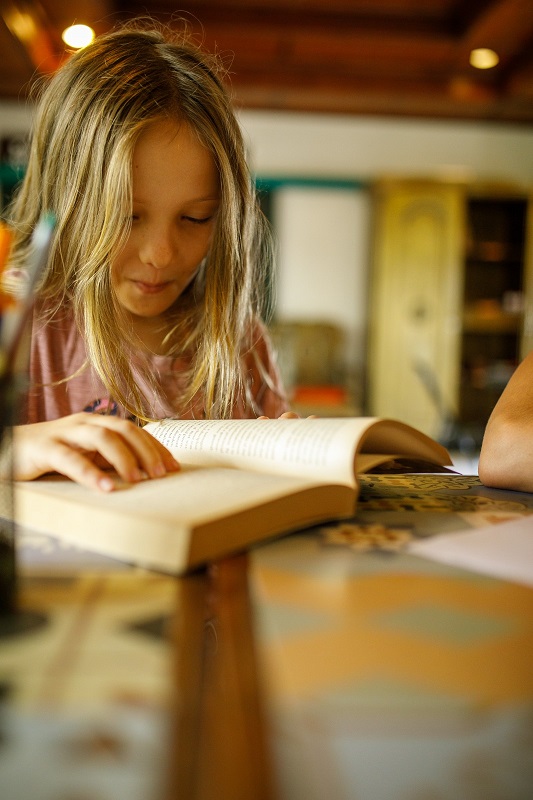
Developing strategies such as connecting, predicting, summarizing, paraphrasing, inferring, and creating images. Novel studies include "The Wishing Tree" and "The Boy Who Harnessed the Wind".
Speaking & Listening
through discussions, conversations, oral reports, inquiries, storytelling, and debates.
Viewing
Recognizing different representations in texts, and understanding the purpose and intended audience of multimodal texts.
02
Mathematics
Basic Operations and Place Value
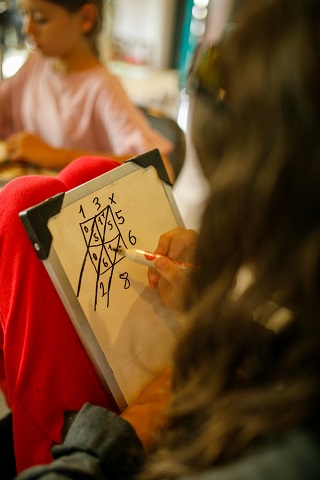
Students practice addition, subtraction, multiplication, and division with multi-digit numbers, and work on place value and decimal operations.
Fractions
Emphasis on fraction equivalence, comparison, and multiplication and division.
Geometry
Exploring shapes, measuring angles, and understanding properties of two and three-dimensional figures on the coordinate plane.
03
Science
Biological Sciences
Study of the characteristics, systems, and behaviours of humans, animals, and plants.
Material Sciences
Exploring origins and properties of human-made materials and their purposes.
Physical Sciences:
Understanding forces, scientific principles, and applying scientific knowledge through hands-on projects.
Earth and Space Sciences:
Studying natural phenomena, Earth's eco-system, and finite versus infinite resources.
04
Social Studies
Social Organization and Culture
Exploring interactions and organization within and among societies.
Economic Activities
Studying human interaction, economic activities, including trade, supply, and demand.
Continuity and Change
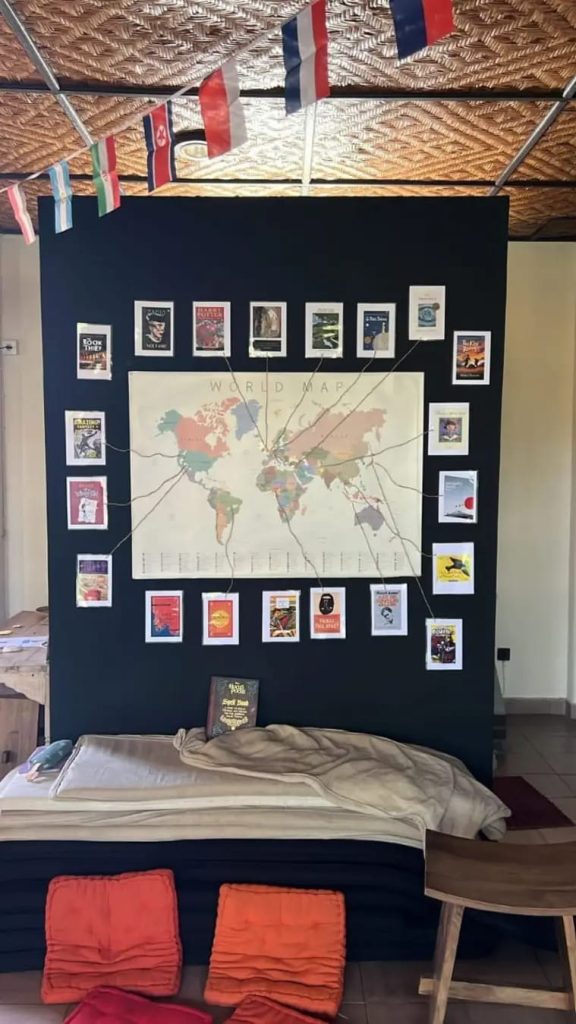
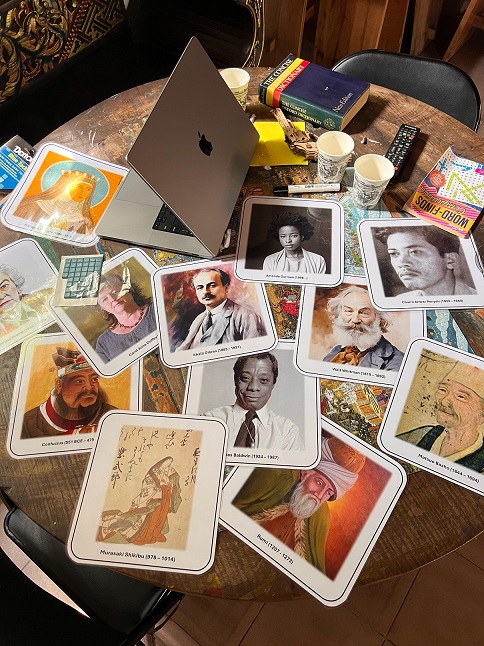
Learning about historical figures and events to understand how they helped shape the present.
05
Entrepreneurship
Basic Business Concepts
Understanding what a business is, different types of businesses, and the basics of how businesses operate.
Idea Generation and Creativity
Learning how to brainstorm ideas for products or services that create value for others, and thinking creatively about how to bring these to market.
Marketing & Branding
Understanding the basics of marketing, how to create a brand, and ways to promote a business.
Financial Literacy
Introduction to basic financial concepts such as money management, budgeting, and simple profit and loss calculations.
06
Logical Thinking
Logical Problem Solving
Developing logical thinking and problem-solving skills through puzzles, games, and simple cooperative tasks.
Digital Literacy
Gaining familiarity with basic computer operations, internet safety, and responsible use of technology.